Scalp Health 101: It's Not You, It's Your Dry Shampoo. Break Up With Your Buildup.

A good hair day starts before the first strand leaves the scalp. When the skin under your hair is balanced, hair can look fresher, feel softer, and respond better to the products you use. When the scalp is flaky, tight, oily, or irritated, even the best styling routine can fall flat.
Scalp health is skin health. That means it can be affected by weather, washing habits, product buildup, stress, sensitivity, and the natural oil levels of the scalp. This guide covers common scalp issues, how they can affect hair, and why a scalp scrub can be a simple reset step in your routine.

Your scalp has a bigger job than you think
The scalp supports hair follicles, produces natural oils, and acts as a protective barrier. When that barrier gets disrupted, the signs often show up fast.
Common scalp concerns include:
Dandruff
Flaking that may come with itchiness or oiliness. Dandruff is commonly linked to scalp oil, skin cell turnover, and sensitivity to naturally occurring yeast on the skin.
Dryness
Tightness, fine flakes, and a rough or uncomfortable feeling. Dry air, overwashing, harsh cleansers, and hot water can all make it worse.
Irritation
Redness, tenderness, burning, or itchiness. This can happen after using strong products, fragrances, dyes, tight styles, or after scratching an already sensitive scalp.
Product buildup
Styling creams, gels, dry shampoo, oils, and conditioners can collect near the roots. Over time, the scalp may feel coated, greasy, or hard to cleanse.
This article is for general information only. Persistent flaking, pain, sores, hair loss, or severe itching should be checked by a dermatologist or licensed medical professional.
Scalp problems can change how your hair looks and feels
Hair does not grow in a vacuum. It grows from follicles set into the scalp, so the condition of that skin matters.
When the scalp is congested, dry, or irritated, hair may seem dull, limp, or harder to style. Buildup can weigh down roots, making fresh hair look greasy sooner. Flakes can sit along the hairline or part, which can make the hair look less clean even after washing.
Itching can also create a cycle. The scalp feels uncomfortable, scratching follows, and that friction can lead to tenderness or breakage near the roots. Dryness can make hair feel rougher because the scalp and strands are not getting the comfort and slip they need.
A balanced scalp routine does not need to be complicated. For many people, it starts with gentle cleansing, regular rinsing, careful product use, and occasional exfoliation.
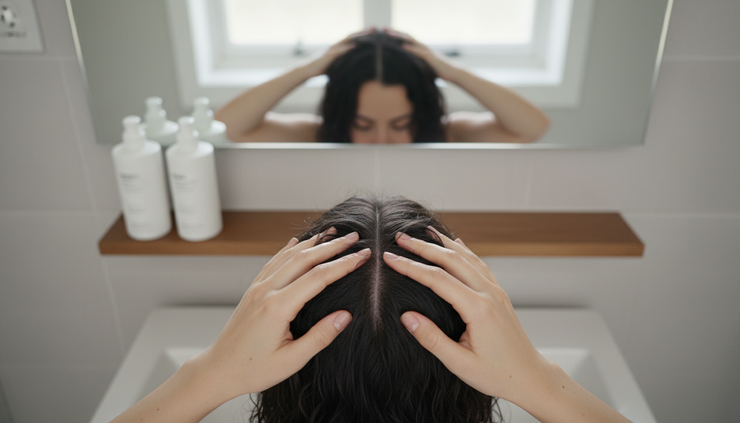
A scalp scrub can help reset your roots
A scalp scrub is an exfoliating treatment used before or during washing. It usually contains small particles, nourishing ingredients, or both. The goal is not to scrape the scalp. The goal is to gently lift away what shampoo alone may miss.
The biggest benefits include:
Exfoliation
A scrub helps loosen dead skin cells and visible flakes so they can rinse away more easily.
Product buildup removal
It can help clear residue from styling products, oils, dry shampoo, and heavy conditioners near the roots.
A fresher scalp feel
Removing buildup can make the scalp feel cleaner and lighter.
Improved massage and circulation
The act of massaging the scalp can increase the feeling of warmth and stimulation. This can make the routine feel energizing and relaxing.
Better product performance
When the scalp is less coated, shampoos and treatments can spread more evenly.
Use a scalp scrub with light pressure. Fingertips are enough. Nails can scratch the skin, especially if the scalp is already irritated.
Most people do not need to scrub daily. Once a week or every other week is often plenty, depending on hair type, scalp oiliness, and how much styling product is used.
BeastHeart introduces Grounds for Divorce coffee scalp scrub
BeastHeart’s new Grounds for Divorce coffee scalp scrub is built around the idea of clearing out what is no longer serving your scalp. The name is playful, but the purpose is practical: remove buildup, refresh the roots, and leave the scalp feeling cared for.
The formula brings together exfoliating coffee grounds with ingredients often used in skin and hair care for softness, moisture, and comfort.

Coffee grounds help lift buildup
Coffee grounds give the scrub its physical exfoliating texture. They help loosen flakes, dead skin, and residue around the roots when massaged gently into the scalp.
Coffee also brings a naturally invigorating feel. The scent and texture can turn a basic wash day into a more sensory ritual, especially for anyone who loves a coffeehouse start to the morning.
Shea butter adds comfort and softness
Shea butter is rich and conditioning. In a scalp scrub, it helps balance the exfoliating feel of coffee grounds with a creamy, cushiony texture. That matters because scalp care should never feel harsh.
It can also help reduce that stripped feeling some cleansers leave behind, especially on dry or textured hair.
Coconut oil supports slip and shine
Coconut oil is a familiar hair care ingredient for a reason. It adds slip, helps smooth the feel of strands, and can make the scrub easier to massage through sections of hair.
For very fine or oily hair, a little goes a long way. The key is to rinse well and follow with shampoo if needed.
Aloe vera juice powder brings a soothing touch
Aloe is widely used in skin care for its cooling, hydrating feel. Aloe vera juice powder helps add that comfort-focused element to the formula.
This is helpful in a scrub because exfoliation works best when it is paired with ingredients that keep the experience gentle.
Manuka honey helps attract moisture
Honey is a natural humectant, which means it helps attract and hold moisture. Manuka honey gives the scrub a soft, conditioning feel and helps keep the routine from feeling too abrasive.
It also adds to the rich texture of the product, making it feel more like a treatment than a rough polish.
How to use a scalp scrub without overdoing it
Start with damp hair and section it so the scrub can reach the scalp instead of sitting on top of the hair. Apply a small amount at a time, then massage with the pads of your fingers.
Use slow circles for one to two minutes. Focus on areas that collect buildup, such as the hairline, crown, and nape. Rinse thoroughly, then shampoo if your hair needs it.
Skip scrubbing if the scalp is sunburned, scratched, inflamed, or painful. If dandruff is severe or keeps coming back, a medicated shampoo or dermatologist guidance may be a better next step.

A fresher scalp can change the whole routine
Scalp care is not a trend layered on top of hair care. It is the foundation. Dandruff, dryness, irritation, and buildup can all affect how hair looks, feels, and behaves. A gentle scrub can help clear the way by exfoliating flakes, lifting residue, and turning wash day into a more intentional reset.
BeastHeart’s Grounds for Divorce coffee scalp scrub brings that reset together with coffee grounds, shea butter, coconut oil, aloe vera juice powder, and manuka honey. The result is a scalp treatment made for people who want their roots to feel clean, comfortable, and ready for better hair days.


Comments