Skin Barrier SOS: Moringa, Calendula, Panthenol and Niacinamide to the Rescue

Your skin barrier does not send a polite memo when it is struggling. It gets loud. Tightness after cleansing. Sudden stinging from products that used to behave. Flaky patches. Redness. That shiny-but-dry look that says, “I am moisturized in theory only.”
The skin barrier is your face’s tiny bouncer, raincoat, and repair crew all in one. When it works, skin feels calm, flexible, and comfortably hydrated. When it is stressed, even a simple routine can feel like a betrayal.
The good news is barrier care is not glamorous in the dramatic sense. It is better than that. It is practical, steady, and deeply satisfying. Herbs like moringa and calendula can bring comfort and nourishment, while actives like panthenol, hyaluronic acid, and niacinamide help hydrate, soothe, and support repair.
This is Skin Barrier SOS, but make it smart.
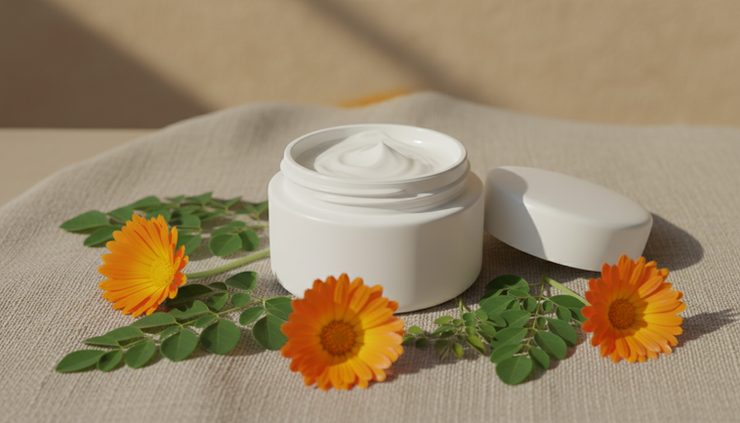
What your skin barrier actually does
The outermost layer of skin is called the stratum corneum. Think of it like a brick wall. The skin cells are the bricks. The lipids, including ceramides, cholesterol, and fatty acids, are the mortar.
This wall has three main jobs:
Keep water in
Keep irritants out
Help maintain a balanced surface environment
When that wall gets gaps, water escapes faster. Irritants slip in more easily. Skin can feel dry, itchy, reactive, rough, or inflamed.
Barrier stress can come from many everyday habits:
Over-cleansing
Using too many exfoliating acids
Retinoids without enough recovery time
Harsh scrubs
Cold, dry air
Sun exposure
Fragrance-heavy products
Picking at breakouts
Skipping moisturizer because skin feels oily
Oily skin can have a damaged barrier too. So can acne-prone skin. So can mature skin, sensitive skin, and skin that has been “doing everything right” but doing too much of it.
Barrier care is not about quitting actives forever. It is about knowing when to press pause, feed the wall, and let skin catch its breath.
When skin stings from ordinary products, simplify first. A calm routine often does more than a crowded shelf.
The barrier distress signals worth noticing
Skin rarely fails overnight. It usually whispers before it shouts. Catching the early signs can save weeks of irritation.
Look for:
Tightness that returns soon after moisturizing
Burning or stinging from bland products
Flaking around the nose, mouth, or brows
Redness that lingers
Rough texture that makeup clings to
Breakouts paired with dryness
A shiny surface that still feels dehydrated
Itchiness after washing
If skin is cracked, bleeding, swollen, very painful, or not improving, check in with a licensed dermatologist or another qualified health professional. This article is for general information and is not medical advice.
The rescue squad your barrier actually wants
A stressed barrier does not need a 12-step ceremony. It needs a few ingredients that know their roles.
Here is the lineup.
Ingredient | What it brings | Best for |
Moringa | Fatty acids, antioxidant support, softening oils | Dryness, rough feel, depleted skin |
Calendula | Soothing botanical comfort | Redness-prone or irritated-feeling skin |
Panthenol | Humectant and skin-conditioning support | Tightness, sensitivity, post-exfoliation care |
Hyaluronic acid | Water-binding hydration | Dehydrated, plumpness-seeking skin |
Niacinamide | Barrier support, tone balance, comfort | Uneven tone, visible redness, oiliness with dehydration |
Now let’s give each one its moment.
Moringa is the comfort oil with quiet confidence
Moringa oil comes from the seeds of the moringa tree. In skincare, it is loved for its smooth feel, fatty acid content, and ability to soften skin without feeling as heavy as some richer oils.
For a cranky barrier, moringa can be a helpful finishing ingredient. It does not replace water-binding hydration, but it can help reduce that parched, papery feeling by supporting the lipid layer on the surface.
Moringa works especially well when skin feels:
Rough
Dry after cleansing
Dull from dehydration
Wind-chapped
Tired from too many actives
The move is simple. Use moringa in a moisturizer, balm, or facial oil after water-based hydration. If skin is acne-prone, start with a small amount and patch test. Plant oils can be beautiful, but no single oil is universal.
A good barrier routine treats oils like a topcoat. They help seal and soften. They do not do the whole job alone.

Calendula is the herbal blanket for fussy skin
Calendula has a long history in topical skin care. The bright orange flower is often used in creams, balms, and salves designed for dry or irritated-feeling skin.
Its appeal is easy to understand. Calendula feels gentle, comforting, and low-drama. It fits the barrier repair mood perfectly.
Calendula does not need to make wild promises. Its strength is in being a soothing support ingredient, especially in formulas built around moisturizers, lipids, and calming agents.
Look for calendula in:
Creams for dry or sensitive skin
Barrier balms
After-sun moisturizers
Gentle body lotions
Hand creams
Baby-care inspired formulas, if suitable for adult skin too
One caution, especially for reactive skin: botanicals can still irritate some people. Calendula belongs to the Asteraceae family, which also includes ragweed, daisies, and chamomile. If those plants bother you, patch testing matters.
The goal is calm, not botanical bingo. One or two well-chosen plant ingredients beat a crowded garden in a jar.
Panthenol is the dependable overachiever
Panthenol, also known as provitamin B5, is one of those ingredients that rarely gets the flashy headline but deserves a permanent seat at the table.
It acts as a humectant, which means it helps attract and hold water. It also has a lovely skin-conditioning effect that makes formulas feel more comforting. In barrier routines, panthenol is a favorite because it plays nicely with almost everyone.
Panthenol is useful when skin feels:
Tight
Easily irritated
Dry but not necessarily flaky
Stressed after exfoliation
Uncomfortable after cleansing
It is often found in serums, creams, gels, creams for compromised skin, and after-care products. It pairs well with hyaluronic acid, glycerin, ceramides, niacinamide, and bland moisturizers.
If your routine feels too sharp, panthenol brings the soft edges back.
Hyaluronic acid is hydration with a catch
Hyaluronic acid is famous for holding water. It is a humectant, and it can make skin look plumper and feel more supple when used well.
The “when used well” part matters.
Hyaluronic acid works best when layered with moisturizer. If you apply it to damp skin and seal it in, it can be fantastic. If you apply it in a very dry environment and skip moisturizer, some people find skin feels tighter later.
Use it like this:
Cleanse gently.
Leave skin slightly damp.
Apply hyaluronic acid serum or a moisturizer containing it.
Follow with a cream or lotion to lock in comfort.
Hyaluronic acid is not a barrier repair ingredient in the same way lipids are, but hydration supports the conditions your barrier needs to recover. Dry, tight skin is less flexible. Hydrated skin behaves better.
Think of hyaluronic acid as the water delivery. Your moisturizer is the lid.

Niacinamide is the steady barrier coach
Niacinamide, a form of vitamin B3, has earned its reputation for good reason. It is widely used to support the skin barrier, improve the look of uneven tone, help with visible redness, and balance the feel of oily skin.
For barrier care, niacinamide is especially interesting because research suggests it can support the skin’s natural lipid production, including ceramides. That is exactly the kind of background work a damaged barrier appreciates.
The catch is concentration. More is not always more. Many people do well with lower to moderate percentages. Very high-strength formulas can cause flushing, stinging, or irritation for some skin types, especially when the barrier is already annoyed.
If skin is in SOS mode, choose niacinamide in a gentle moisturizer or a balanced serum. Do not pair it with every powerful active you own on night one.
Niacinamide is the friend who helps clean up after the party. Let it work in peace.
Build a skin barrier maintenance and repair routine
The best barrier routine is boring in the best way. It removes what is bothering skin, gives it water, gives it lipids, and protects it from more stress.
Here is a practical routine for a barrier reset.
Morning
Cleanse lightly
If skin is dry or not oily in the morning, rinse with water or use a very gentle cleanser. Avoid foamy, squeaky-clean formulas during a repair phase.
Hydrate
Apply a humectant serum or toner with ingredients like hyaluronic acid, glycerin, or panthenol.
Treat gently
Use niacinamide if your skin already tolerates it. If everything stings, skip this step for a few days and let moisturizer do the talking.
Moisturize
Pick a cream or lotion with barrier-friendly ingredients. Look for ceramides, fatty acids, panthenol, niacinamide, squalane, moringa oil, or calendula.
Protect
Use broad-spectrum sunscreen every morning. UV exposure can make irritated skin look and feel worse. Choose a texture you will actually wear.
Evening
Cleanse without drama
Use a gentle cleanser. If wearing heavy sunscreen or makeup, use a mild cleansing balm or oil first, then follow with a soft cleanser if needed.
Replenish
Apply panthenol or hyaluronic acid to slightly damp skin.
Seal
Use a barrier cream. If skin feels very dry, add a tiny amount of moringa oil or a balm over dry zones.
Pause the spicy stuff
Take a break from exfoliating acids, strong retinoids, harsh scrubs, and high-strength vitamin C until skin feels calm again.
That does not mean these ingredients are bad. It means timing matters. A gym workout is healthy, but not when your ankle is sprained.
What to stop doing while your barrier heals
Barrier repair is as much about subtraction as addition.
For one to two weeks, give skin a simpler environment. That may mean pausing:
Glycolic acid, lactic acid, and other strong exfoliating acids
Scrubs and cleansing brushes
Strong retinoids
Fragrance-heavy products
Alcohol-heavy toners
Clay masks used too often
DIY lemon juice, baking soda, or toothpaste treatments
Also watch your water temperature. Hot water feels soothing for five seconds, then often leaves skin drier. Use lukewarm water and pat skin dry instead of rubbing.
If skin improves, reintroduce actives slowly. One product at a time. A few nights a week. No victory lap with every bottle in the cabinet.
Ingredient pairings that make sense
Barrier ingredients are team players. The right combinations can make a simple routine feel much more complete.
Panthenol plus hyaluronic acid
Niacinamide plus ceramides
Calendula plus panthenol
Moringa plus glycerin or hyaluronic acid
Niacinamide plus sunscreen
Great for tight, dehydrated skin that needs water and comfort.
Strong choice for ongoing barrier support and a smoother feel.
Gentle, soothing, and useful when skin feels reactive.
Hydration under, softening oil over. A classic dry-skin move.
Helpful for skin that is working on tone, redness, and daily resilience.
The smartest formulas often combine humectants, emollients, and occlusives.
Humectants grab water. Emollients smooth and soften. Occlusives reduce water loss. A barrier cream that covers all three bases can do more than a watery serum alone.
How long barrier repair usually takes
Mild barrier stress can feel better in a few days once you stop the irritants and use a gentler routine. More stubborn dryness or sensitivity can take several weeks of consistent care.
A healthy sign is not instant perfection. It is less stinging. Less tightness. Less redness after washing. Makeup sits better. Skin stops feeling like it is one cleanser away from mutiny.
If symptoms persist or keep returning, the issue may be more than a simple damaged barrier. Conditions like eczema, rosacea, allergic contact dermatitis, or acne can mimic barrier damage or make it worse. A professional diagnosis can save a lot of trial and error.

A simple SOS checklist for calmer skin
When your barrier feels dramatic, do this:
Switch to a gentle cleanser
Stop exfoliating for now
Use panthenol and hyaluronic acid for hydration and comfort
Choose niacinamide in a gentle formula if tolerated
Add calendula for soothing support
Use moringa oil or a richer cream to soften dry areas
Moisturize morning and night
Wear sunscreen daily
Patch test new products
Give skin time to recover before restarting strong actives
Barrier care is not a punishment routine. It is not plain. It is disciplined, cushiony, and quietly powerful.
The winning formula is simple: hydrate, soothe, replenish, protect. Moringa and calendula bring the botanical comfort. Panthenol and hyaluronic acid bring the water support. Niacinamide helps coach the barrier back toward balance.
When skin is yelling, do not yell back with more acids, scrubs, and ambition. Lower the volume. Feed the barrier. Let calm become the new glow.


Comments